

Restaurant Discoverability Checklist: What to Optimize First
There was a time when a great location and foot traffic did most of the heavy lifting for restaurants.
Now? Most of the work comes down to a search result.
When someone types “best brunch near me,” asks Siri for “gluten-free pizza,” or searches Google for “late night tacos,” your restaurant is being evaluated instantly — based on your listings, reviews, menu data, and overall digital presence.
Discoverability isn’t one tactic. It’s a system.
If you’re wondering where to start (or what to fix first), this checklist breaks it down into clear priorities. We will start with the foundation and work up from there.
1. Lock Down Your Core Listings (Start Here)
Before you optimize anything else, your listings need to be accurate and consistent. This is the base layer of discoverability.
Your highest-priority platforms:
- Google (Google Business Profile)
- Apple (Apple Maps / Apple Business Connect)
- Yelp
Discoverability Checklist: Listings
▫️High-quality, recent photos are uploaded
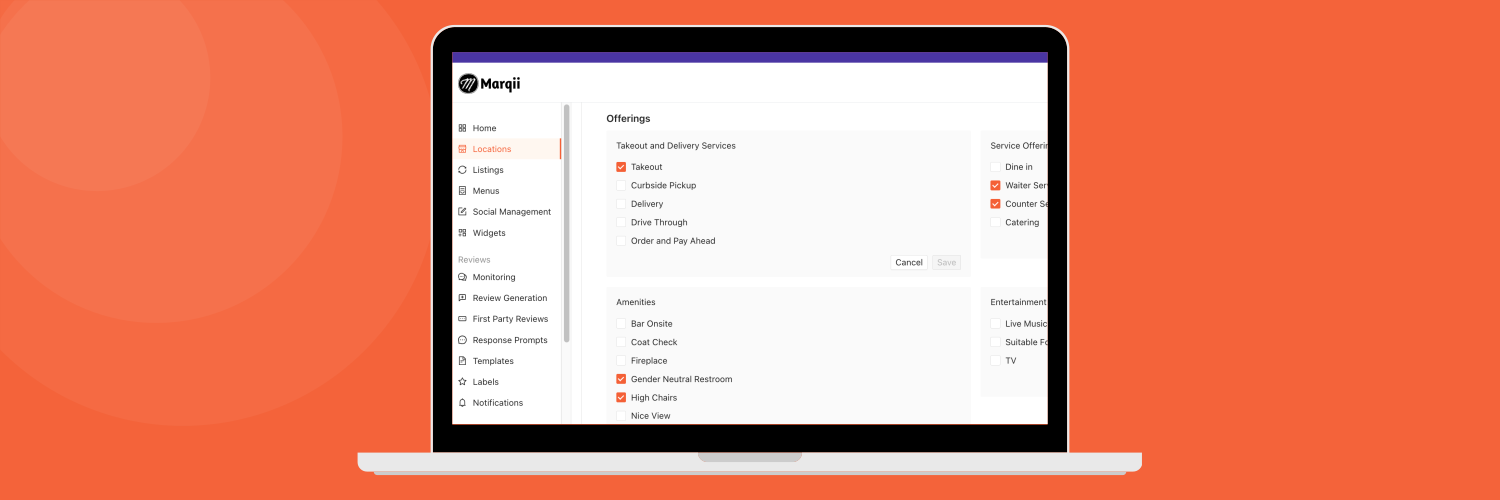
▫️Attributes are fully completed (outdoor seating, happy hour, live music, etc.)
▫️Service types are updated (dine-in, takeout, delivery)
▫️Hours (including holiday hours) are accurate
▫️Primary and secondary categories are correct
▫️Name, Address, Phone (NAP) are identical everywhere
Inconsistent data confuses search engines (and guests). If your hours are wrong or your category is too broad, you may not appear in filtered searches at all.
Pro tip (beyond any tool): Audit your primary category annually. Sometimes switching from “Restaurant” to something more specific (like “Mexican restaurant” or “Brunch restaurant”) can meaningfully impact your visibility.
For multi-location brands, this matters even more. One incorrect data point at one location can impact performance regionally.
2. Respond to Reviews (Yes, This Impacts Discoverability)
Reviews don’t just influence reputation. They influence ranking, engagement, and conversion.
Search engines prioritize businesses that show activity and engagement. And guests notice too:
- Restaurants that respond to reviews see an average star rating increase of 30%.
- 45% of consumers are more likely to support businesses if they see that they’ve responded to negative reviews.
- 54.7% of consumers read at least four reviews before making a decision.
If you’re not responding consistently, you’re missing both visibility and trust signals.
Discoverability Checklist: Reviews
▫️Use natural language that reflects your brand voice
▫️Personalize responses (avoid generic copy-paste)
▫️Respond to as many positive reviews as possible (we recommend 100% here as well, but we understand that sometimes that’s not possible)
▫️Respond to 100% of negative reviews
Search engines and AI tools analyze review content. When guests consistently mention “great patio,” “fast service,” or “amazing margaritas,” that language can influence how your restaurant is summarized or surfaced in AI search results.
Beyond the response itself: Create an internal escalation process for serious complaints. And don’t just reply. Analyze trends. If multiple reviews mention slow service during brunch, that’s operational insight hiding in plain sight.
3. Structure Your Menu Data (This Is the Big Miss)
Uploading a PDF menu to your website is not enough anymore.
AI search engines and modern discovery platforms rely on structured data — meaning individual menu items, descriptions, and attributes that can be read and categorized.
If your menu lives only as a PDF or is missing descriptions, it’s significantly harder for search engines to understand what you actually serve.
Discoverability Checklist: Menu
▫️Highlight seasonal and limited-time offers
▫️Keep pricing accurate
▫️Include dietary tags (gluten-free, vegan, vegetarian, etc.)
▫️Add clear, descriptive item descriptions
▫️Upload structured menu items (not just a PDF)
Structured menu data improves:
- Item-level discoverability
- Filtering by dietary preferences
- Visibility in “best of” AI summaries
- Accuracy across platforms
Pro tip: Avoid vague category names. “Specialties” doesn’t tell search engines much. “Signature Wood-Fired Pizzas” does.
Als,o make sure your POS, website, and listings are aligned. Inconsistent menu names or pricing across platforms can hurt both trust and discoverability.
4. Optimize Attributes & Filters (The Hidden Lever)
Many searches today are filter-based:
- “Restaurants with outdoor seating”
- “Happy hour near me”
- “Late-night food open now”
- “Gluten-free pizza”
If your attributes aren’t fully completed, you simply won’t appear in those filtered searches.
Discoverability Checklist: Attributes
▫️Update temporary closures or seasonal adjustments
▫️Confirm accessibility information
▫️Update alcohol offerings
▫️Fill out every relevant attribute
Attributes are often overlooked because they feel minor. They’re not. They’re directly tied to how platforms match your restaurant to intent-based searches.
Beyond platform updates: Audit your competitors. If they’re showing up for “family-friendly brunch” and you’re not, compare attributes and categories. Sometimes the fix is surprisingly simple.
Quarterly attribute audits are a smart habit — especially before peak seasons.
5. Post Regular Updates (Freshness Signals Matter)
Search engines reward activity.
Posting regular updates to your profiles signals that your business is active and engaged. It also gives guests new reasons to choose you.
And guests are actively looking:
- 50% of customers look for promotions before choosing a restaurant.
- 62% are motivated by limited-time offers.
Discoverability Checklist: Posts
- Promote limited-time offers
- Highlight seasonal menu items
- Share events (live music, trivia, themed nights)
- Feature high-performing dishes
When writing posts, think about guest intent. Instead of “New Menu Item,” try language aligned with how guests search:“New Winter Brunch Specials in Nashville.”
Limited-time language (“only available this month”) can increase urgency and engagement.
6. Don’t Forget Your Website (Technical Basics Matter)
Your website is still a core source of truth for search engines and AI tools.
Even if most of your traffic comes from listings, your site plays a major role in discoverability.
Discoverability Checklist: Website
▫️Restaurant schema markup
▫️Location-specific landing pages (for multi-unit brands)
▫️Consistent NAP across pages
▫️Embedded Google Map
▫️Clear online ordering integration
▫️Click-to-call functionality
▫️Fast mobile load speed
Schema markup helps search engines understand your restaurant’s structure — from hours to menu to location details.
If you work with a web partner, ask about structured data and page performance. Even small speed improvements can impact conversion and search performance.
7. Build a Discoverability Audit Rhythm
Discoverability isn’t a one-time fix. It’s an ongoing discipline.
Here’s a simple cadence to follow:
Weekly
- Review and response audit
- Check for new reviews and trends
Quarterly
- Attribute audit
- Photo refresh
- Category review
Seasonally
- Menu updates
- Limited-time promotion planning
And here’s a simple exercise:Search your own restaurant on Google. Then ask an AI tool what it says about your business. Compare that to your top three competitors.
What themes come up? What’s missing? What’s outdated?
Your discoverability is only as strong as your weakest data point.
Start With the Foundation
If this feels like a lot, don’t worry — you don’t need to fix everything at once.
Start here:
- Core listings accuracy
- Review response consistency
- Structured menu data
- Complete attributes
- Fresh posts
- Website fundamentals
When those layers work together, discoverability compounds.
For current Marqii clients: log into your dashboard and run a quick audit this week. Centralizing your listings, reviews, and menus makes this process dramatically easier.
If you’re managing all of this manually and it’s overwhelming, schedule a demo to see how our team helps restaurants simplify the foundation.
Because these days, discoverability isn’t optional. It’s essential.