
Beyond the NAP: What a “Complete” Business Listing Means in 2026
For years, the gold standard for restaurant listings was simple: NAP—Name, Address, and Phone number. If those three things were accurate, you were in decent shape.
But in 2026, that’s only the starting point.
Today, guests are doing far more than searching for your phone number. They’re using local SEO-driven “near me” searches, browsing cuisine categories, and even asking AI search tools questions like: Who has the best gluten-free sandwiches near me? or Does that cafe on Main Street have a heated patio?
That means a “complete listing” is no longer just about being findable. It’s about being discoverable in local search and easy to choose once guests find you.
At Marqii, we think about this as digital hospitality: showing up online with the same level of care, accuracy, and guest-first attention you bring inside your four walls.
In this guide, we’ll break down what makes a listing truly complete—and how the right systems can improve local SEO visibility, non-branded search discovery, and first-party conversion.
What Makes a Listing “Complete” Today?
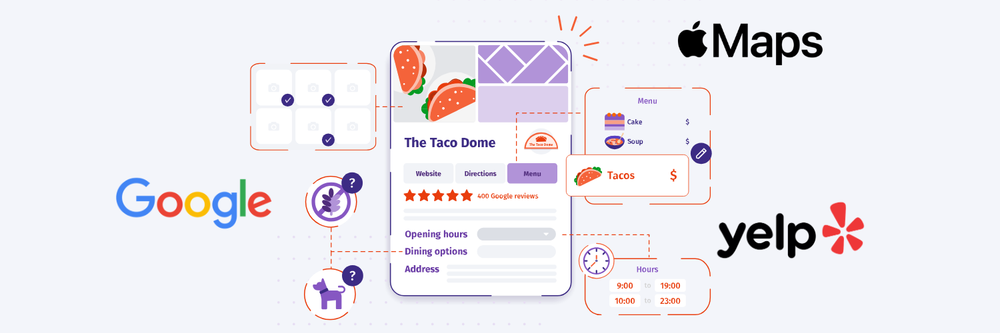
A modern business listing is no longer a static business card. It helps guests decide where to eat, what to order, and whether your restaurant fits exactly what they need in that moment.
Marqii client Groucho's Deli saw that accurate listings and menu data across 31 locations helped drive nearly double the first-party digital ordering revenue—a strong reminder that small details online can have a major revenue impact.
So what should operators focus on?
1) The Basics: Your Digital Foundation
The fundamentals still matter—but now they need to support local search rankings too.
- NAP consistency: Your name, address, and phone number should match exactly across every platform.
- Pin accuracy: Your map pin should land at your front door, not the parking lot, neighboring suite, or alley entrance.
- Hours: Regular, holiday, and special event hours should always stay current.
- Category accuracy: Make sure your primary and secondary categories align with what guests are searching, whether that’s sandwich shop, family restaurant, or late-night food.
Operator tip: Audit your hours before every holiday weekend and seasonal menu launch. Incorrect hours remain one of the fastest ways to lose guest trust.
The more accurate these signals are, the stronger your visibility in “restaurants near me” and cuisine-specific local SEO searches.
2) Your Menu: The Conversion + SEO Layer
This is one of the biggest gaps we see.
A complete listing should include a structured, searchable menu, not just a PDF upload.
- Skip the PDFs: Search engines can’t reliably interpret PDFs the way they can structured menu data.
- Add rich item details: Prices, descriptions, dietary tags, and photos all help guests convert faster.
- Use discoverable menu language: Include terms guests actually search for, like gluten-free sandwiches, vegan bowls, or kids meals.
- Keep it current: If an item is unavailable, guests shouldn’t discover that after they click “Order.”
Operator tip: Prioritize photos and descriptions for your top 10 best-selling items first. That’s usually where the fastest lift happens.
This is one of the easiest ways to improve non-branded local SEO performance, especially for high-intent searches like best lunch near me.
3) Amenities & Attributes: The Decision-Makers
This is where listing completeness starts directly influencing discovery.
Guests use filters constantly, whether they realize it or not.
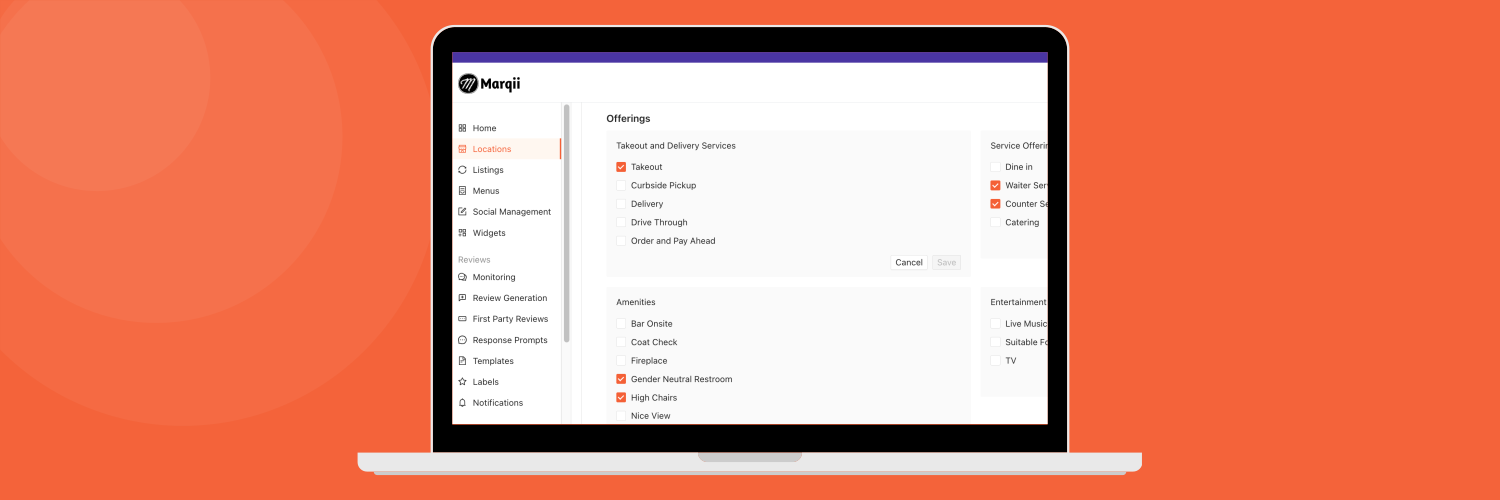
Make sure every possible attribute is filled out, including:
- Outdoor seating
- Delivery
- Curbside pickup
- Good for kids
- Wheelchair accessibility
- Wi-Fi
- Parking
- Patios
These details help your restaurant appear in the exact moments guests are narrowing down their choices.
A missing patio attribute could mean disappearing from hundreds of “outdoor dining near me” searches.
4) Photos: Your Digital First Impression
Listings without updated photos often underperform, even if every other field is accurate.
A complete listing should include:
- Recent food photography
- Interior and exterior shots
- Team and hospitality moments
- Seasonal LTO visuals
- User-generated guest photos
Fresh photos help set expectations and build confidence before guests ever arrive.
Operator tip: Refresh seasonal hero photos quarterly so your listing reflects what guests will actually see today.
How to Optimize the Big Three
Each platform rewards completeness a little differently. Here’s where operators should focus first.
Google Business Profile
For many guests, Google is your storefront.
- Use Google Posts for LTOs, promotions, and events
- Naturally include high-intent search terms in menu items and descriptions
- Keep ordering links updated
- Upload photos regularly
This is especially important for non-branded discovery searches like sandwiches near me or best lunch near me.
Apple Maps
Apple Maps continues to drive high-intent direction clicks and order actions.
Focus on:
- Direct action links to first-party ordering
- Updated hours and location details
- Professional photography
- Accurate place card details
For operators focused on first-party revenue, this is one of the easiest wins.
Yelp
Yelp still plays a major role in decision-making, especially for amenity and review-based searches.
Make sure to complete:
- Review responses
- Payment methods
- Parking information
- Dining style
- Noise level
The more complete the checklist, the more confidence you give guests.
Where Operators Lose Time (and How to Fix It)
The second biggest challenge with listing completeness isn’t knowing what to do.
It’s keeping everything accurate at scale.
Updating holiday hours, 86’ing menu items, adjusting prices, or rolling out an LTO across dozens of locations can quickly become a manual nightmare.
That’s why the most effective teams rely on a single source of truth.
With Marqii, operators can update listings, menus, and hours once and push those changes across every major platform—saving time while reducing inconsistencies.
Even better, POS integrations help keep menu data synced automatically, so your listings stay accurate with what’s actually available in-store.
That means fewer disappointed guests, fewer support tickets, and more first-party conversions.
Why Listing Completeness Pays Off
A complete listing does more than clean up your digital presence. It directly impacts:
- Near me search visibility
- Non-branded keyword rankings
- Direction clicks
- First-party order volume
- AI search answer inclusion
- Guest trust
The ROI can show up in:
- More profile views
- More direction clicks
- Higher first-party order volume
- Better keyword visibility
- Less staff time spent on manual updates
The Groucho’s Deli results say it best:
- +85.7% first-party digital ordering revenue growth
- 8.9M total listing engagements
- 381+ days of staff time saved
Want the full story? Download the complete Groucho’s Deli case study to see how listing accuracy, menus, and review response drove measurable growth across all 31 locations.
Completeness = Convenience
In 2026, a complete listing is really about one thing: making it easier for guests to say yes.
Yes to visiting.
Yes to ordering.
Yes to choosing your restaurant over the one down the street.
When your listings are accurate, searchable, visually strong, and easy to maintain, they become an extension of your hospitality—not just another marketing task.
And when updates happen automatically, your team gets time back.
Want to turn your listings into revenue? Schedule a demo with our team to learn how we can help.